My Recent Work

Sabari wins cancer prize

Benjamin Sabari received the Pershing Square Sohn Cancer Prize to fund innovative cancer research. The award was given to 13 early-career cancer researchers in the United States and provides $250,000 a year for three years. In addition to funding, the award seeks to expedite industry–academia collaborations, facilitate networking and host retreats and symposia for prize winners. The Pershing Square Sohn Cancer Prize is awarded annually by the Pershing Square Sohn Cancer Research Alliance, a prog...

Loss of a metabolic gene protects against fatty liver disease

More than one-third of the global population has metabolic dysfunction-associated steatotic liver disease, or MASLD, a condition in which fat accumulates in the liver. MASLD can progress to more severe diseases like metabolic dysfunction-associated steatohepatitis, cirrhosis and hepatocellular carcinoma. Treatment options are limited and focus on weight loss through lifestyle changes and the use of a couple of medications, while liver transplantation is reserved for advanced disease.

With few...

How radioactive implants worsen facial nerve injury

Iodine-125, or I-125, seeds exhibit low-dose radiation over time, killing cancer cells. The implantation of I-125 seeds into oral and maxillofacial tumors allows for site-specific treatment. However, I-125 seeds can cause facial nerve damage to surrounding tissues, which can have drastic effects on a patient’s daily life. Recently published in the Journal of Biological Chemistry, Jin Zhu, Xin Ouyang and Lifu Yu of the Kunming Medical University and a research team in China investigated the mecha...

Hart promoted to full clinical professor

Orla Hart was promoted to full clinical professor of biochemistry in the College of Agriculture at Purdue University. Her promotion was approved by the Purdue University Board of Trustees and will be effective in August 2026.

Hart has worked in the Department of Biochemistry at Purdue since 2013. She is an expert in undergraduate biochemistry education, researching strategies for increased student engagement and improved learning outcomes. In addition to her scholarly work, Hart teaches cours...

Glycogen phosphatase modulates brain metabolism

Lafora disease, or LD, is a rare but fatal neurodegenerative disorder in which aggregates of abnormal, hyperphosphorylated glycogen form inclusions called Lafora bodies. LD can be caused by mutations in the gene encoding the glycogen phosphatase laforin. In studies of LD, a catalytically inactive form of laforin called LCS is often used as a negative control, but unexpectedly, mice lacking laforin and expressing LCS exhibit almost no Lafora bodies. Therefore, it remained unclear whether the cata...

Pathogen forms biofilms when temperatures drop

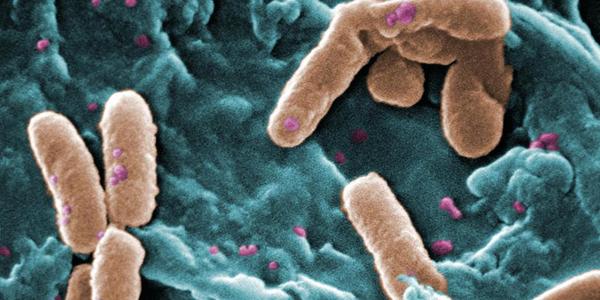
To increase survival and transmission, the pathogen Pseudomonas aeruginosa forms biofilms, or adherent clumps of cells coated in a slimy matrix, in response to environmental stresses. One environmental stress is a temperature decrease, such as from a human host to room temperature in a hospital, where P. aeruginosa is particularly risky for vulnerable patients.

Mechanistically, the secondary messenger cyclic di-guanosine 3’,5’-monophosphate, or c-di-GMP, is increased to promote biofilm format...

Drug Discovery: From Target Identification to Clinical Candidate | The Scientist

After earning her PhD in pharmacology, Barbara Slusher developed small molecule therapeutics in the pharmaceutical industry for 18 years. Then, she brought her expertise to academia, leading the Johns Hopkins Drug Discovery program. In this interview with The Scientist, Slusher discussed her approach to drug discovery, noting challenges and emerging technologies in the field.

The first stages are target identification and validation. This involves selecting a target, such as a protein, receptor...

UFMylation of Pyruvate Dehydrogenase Regulates Mitochondrial Metabolism - preLights

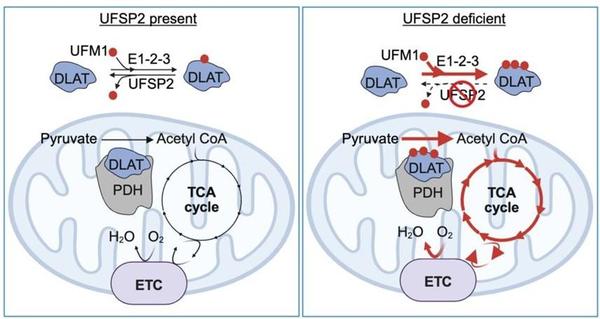
Figure caption: Model proposed by the preprint authors in which UFSP2 regulates PDH activity through DLAT UFMylation. In UFSP2 deficient cells, DLAT is highly UFMylated, increasing PDH activity and downstream TCA cycle activity and oxidative phosphorylation. Figure 5G from Nguyen & Wu et al., 2026 on bioRxiv; preprint is available under a CC-BY 4.0 International license.
Discovered roughly twenty years ago, UFMylation is a ubiquitin-like post-translational modification (PTM). Sharing a similar f...

4,5-dihydroxyhexanoic acid is a robust circulating and urine marker of mitochondrial disease and its severity - preLights

Background:
Mitochondrial diseases are genetic disorders that cause mitochondria to be dysfunctional. They are characterized by defects in the respiratory chain, resulting in a range of different symptoms with a widely variable age of onset. While individual mitochondrial diseases are rare, this group of genetic disorders affects 1 in 5,000 people (Wen et al., 2025). Currently, mitochondrial diseases cannot be cured, with clinical care focusing on managing symptoms. To uncover potential therapeu...

Domesticated Microbes: Lena Pernas on Mitochondria and Metabolic Immunity | The Scientist

Lena Pernas had an early fascination with infectious disease that has expanded to include the role of mitochondria—which she dubs domesticated microbes—as cellular defenders against infection. After first establishing a laboratory at the Max Planck Institute for Biology of Ageing, she recently returned to her undergraduate institution, the University of California, Los Angeles (UCLA), to research the metabolism of infection using Toxoplasma gondii as a model system.

My father was always trying...

Sizing up cells: How stem cells know when to divide

A seemingly simple question has plagued scientists for more than a century: What controls the size of a cell? Just as body size may determine whether a football player is better suited to be a running back or a lineman, cell size shapes much of the function and behavior of the basic units of life. Cells of the same type maintain remarkably consistent sizes. In humans, red blood cells are uniformly small, while egg cells are among the largest cells in the body.

At Stanford University, postdoct...

Jordahl named Gilliam Fellow

Eric Jordahl has been named a 2025 Gilliam Fellow by the Howard Hughes Medical Institute. He is one of thirty 2025 fellows. This award will provide Jordahl and his thesis advisor with three years of graduate funding. The program is named in honor of the late HHMI charter trustee, James H. Gilliam, Jr., who was an attorney, businessman and community leader. In addition to financial support, the awardees will have access to networking and professional development opportunities.

Jordahl is a gra...

Aspartate transaminases are required for blood development - preLights

What I liked/why this new work is important:
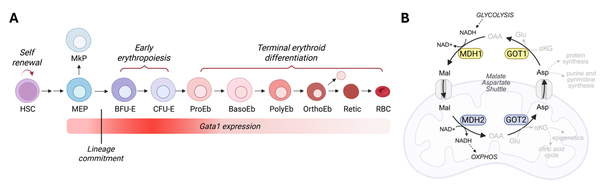
This new work further uncovers metabolic processes essential for early erythropoiesis, and as mentioned in the preprint, targeting metabolism is a promising therapeutic strategy for anemia. Further, this work proposes a novel mechanism for GOT1/2 in early erythropoiesis.
Personally, I really appreciate the rigor of this preprint—the number of in vivo and in vitro models used and the confirmation of results from mice with human systems really strengthe...

Celestial Sips in St. Louis | InPrint - A Scientific Communication Network | Washington University in St. Louis

“As humans, there’s one thing that connects us and that is aliens,” Dr. Tansu Daylan remarked.


I walked into Urban Chestnut in the Grove on a warm September evening. After grabbing my favorite local beer, I made my way over to the meeting room, which was quickly filling up to standing room only. People of all ages were anxiously waiting for the event to begin. And what were we waiting for? We were about to learn how to spot an alien.


In addition to his day job as an astrophysicist and assi...

Encouraging results from mitochondrial replacement therapy study in the UK

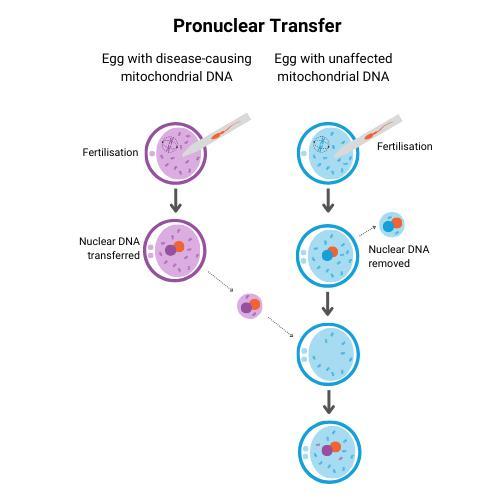
Schematic showing mitochondrial replacement therapy by pronuclear transfer. Image obtained from The Newcastle upon Tyne Hospitals NHS Foundation Trust.


Many of us know mitochondria as the powerhouses of the cell. These cellular compartments are considered a hub for metabolism and are also involved in communicating within the cell, responding to stress, and regulating cell death. Since they make about 90% of the cell’s energy, mitochondria play important roles in organs that use a lot of energ...

Powerhouse Podcast #30: Making Sense of Mito - FBXL4-Associated Mitochondrial Disease

Introducing a special episode of the Powerhouse Podcast: Making Sense of Mito - FBXL4-Associated Mitochondrial Disease. This special edition episode spotlights researchers and the years of scientific work to understand FBXL4 alongside the stories and perspectives of parents of children impacted by FBXL4-associated mitochondrial disease. Helping to Make Sense of Mito are our co-hosts: two researchers from Washington University in St. Louis, Keri-Lyn Kozul, PhD and Hannah Pletcher, and mito mom/podcaster/foundation co-founder, Susan Geoghegan. This special episode bridges the gap to tell the story of FBXL4, bringing together the "team" working toward treatments, including the patient families and the scientists.

FEATURED GUESTS

· Janice Belcher, mom to Juliet

· David Alsina, PhD, Laarson Lab at Karolinska Institute, Sweden: https://ki.se/en/people/david-alsina o The Laarson Lab: https://molmet.ki.se/nils-goran-larsson

· Mike and Susan Geoghegan, parents to Lorelei and Benji

· Julia Pagan, PhD, Pagan Lab at University of Queensland, Australia: https://biomedical-sciences.uq.edu.au/profile/6099/julia-pagan o The Pagan Lab: https://biomedical-sciences.uq.edu.au/research/groups/targeted-protein-degradation

· Natalie Niemi, PhD, Niemi Lab at Washington University, St. Louis, MO, US: https://biochem.wustl.edu/faculty/niemi o The Niemi Lab: https://www.niemilab.com

· Kevin and Courtney Kline, parents to Emery

Special thanks to the families who contributed photos of their children.

REFERENCED IN THIS EPISODE Apricity Hope Project: https://apricityhope.org When Autumn Comes: https://apricityhope.org/autumn/ Live Like Lorelei: Amazon link to purchase UMDF’s Mitochondrial Medicine Conference: https://umdfconference.org/
Leveraging autophagy and pyrimidine metabolism to target pancreatic cancer - preLights

Background:
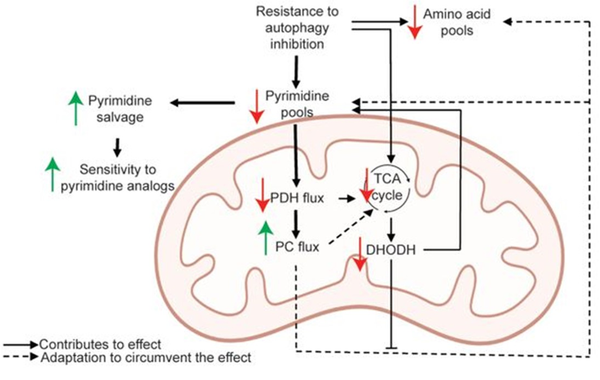
Pancreatic ductal adenocarcinoma (PDA) is a highly lethal cancer, with a five-year survival rate of only 13.3% (Cancer of the Pancreas – Cancer Stat Facts, n.d.). Recently, studies have focused on the role of autophagy in PDA. Autophagy can be thought of as recycling: the process of breaking down and reusing organelles and proteins through the lysosome (Yamamoto et al., 2023), which is especially important during nutrient deprivation and hypoxia. In PDA, autophagy is increased (Yang...

Mitochondria Tune NAD+ Levels for Cells Past Their Prime | The Scientist

Aging comes with loss. Hair becomes thinner, hearing duller, and memory scanter. One of the key regulators of total cellular metabolism, nicotinamide adenine dinucleotide (NAD+), also dwindles.1 “In aging, you may have at most a 30-50 percent decline in NAD+ in different tissues, and we don’t really know which NAD+-dependent processes are likely to be susceptible to that,” said Joseph Baur, a physiologist and expert in NAD+ biology at the University of Pennsylvania Perelman School of Medicine. A...

Succinate Dehydrogenase loss causes cascading metabolic effects that impair pyrimidine biosynthesis - preLights

Updated 27 June 2026 with a postLight by Hannah Pletcher
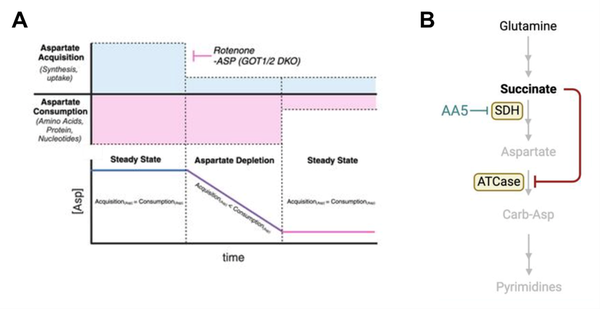
This study has now been published in Nature Metabolism and highlighted in a News & Views article. Compared to the initial preprint, the published paper has many impactful additions. Much of the paper is still based on cell-based assays in which the authors limited aspartate through various methods and observed the effects on metabolism and p...