Loss of a metabolic gene protects against fatty liver disease

More than one-third of the global population has metabolic dysfunction-associated steatotic liver disease, or MASLD, a condition in which fat accumulates in the liver. MASLD can progress to more severe diseases like metabolic dysfunction-associated steatohepatitis, cirrhosis and hepatocellular carcinoma. Treatment options are limited and focus on weight loss through lifestyle changes and the use of a couple of medications, while liver transplantation is reserved for advanced disease.

With few...

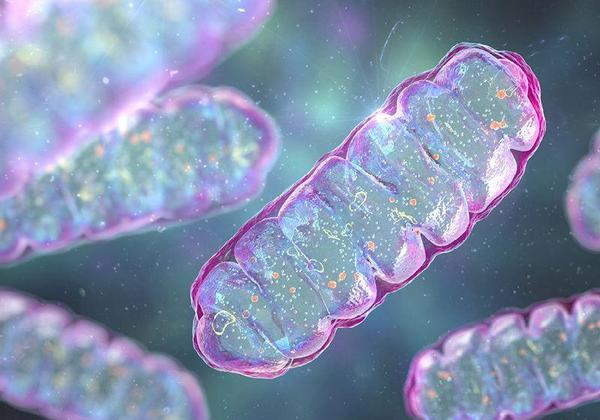
Mitochondria Tune NAD+ Levels for Cells Past Their Prime | The Scientist

Aging comes with loss. Hair becomes thinner, hearing duller, and memory scanter. One of the key regulators of total cellular metabolism, nicotinamide adenine dinucleotide (NAD+), also dwindles.1 “In aging, you may have at most a 30-50 percent decline in NAD+ in different tissues, and we don’t really know which NAD+-dependent processes are likely to be susceptible to that,” said Joseph Baur, a physiologist and expert in NAD+ biology at the University of Pennsylvania Perelman School of Medicine. A...

Sizing up cells: How stem cells know when to divide

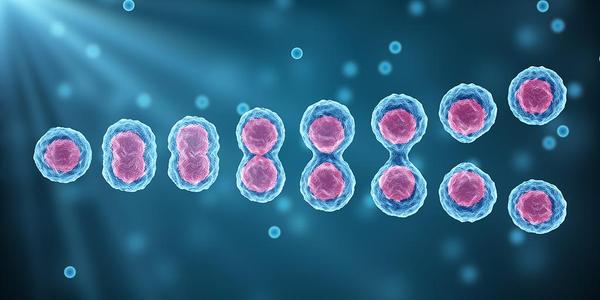
A seemingly simple question has plagued scientists for more than a century: What controls the size of a cell? Just as body size may determine whether a football player is better suited to be a running back or a lineman, cell size shapes much of the function and behavior of the basic units of life. Cells of the same type maintain remarkably consistent sizes. In humans, red blood cells are uniformly small, while egg cells are among the largest cells in the body.

At Stanford University, postdoct...

Powerhouse Podcast #30: Making Sense of Mito - FBXL4-Associated Mitochondrial Disease

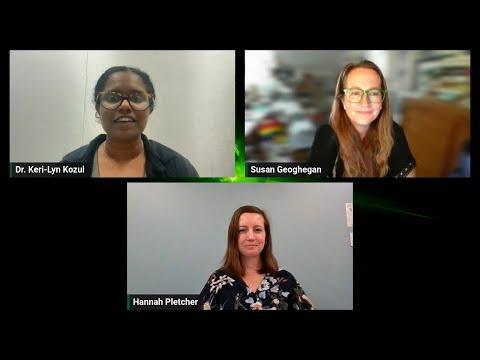
Introducing a special episode of the Powerhouse Podcast: Making Sense of Mito - FBXL4-Associated Mitochondrial Disease. This special edition episode spotlights researchers and the years of scientific work to understand FBXL4 alongside the stories and perspectives of parents of children impacted by FBXL4-associated mitochondrial disease. Helping to Make Sense of Mito are our co-hosts: two researchers from Washington University in St. Louis, Keri-Lyn Kozul, PhD and Hannah Pletcher, and mito mom/podcaster/foundation co-founder, Susan Geoghegan. This special episode bridges the gap to tell the story of FBXL4, bringing together the "team" working toward treatments, including the patient families and the scientists.

FEATURED GUESTS

· Janice Belcher, mom to Juliet

· David Alsina, PhD, Laarson Lab at Karolinska Institute, Sweden: https://ki.se/en/people/david-alsina o The Laarson Lab: https://molmet.ki.se/nils-goran-larsson

· Mike and Susan Geoghegan, parents to Lorelei and Benji

· Julia Pagan, PhD, Pagan Lab at University of Queensland, Australia: https://biomedical-sciences.uq.edu.au/profile/6099/julia-pagan o The Pagan Lab: https://biomedical-sciences.uq.edu.au/research/groups/targeted-protein-degradation

· Natalie Niemi, PhD, Niemi Lab at Washington University, St. Louis, MO, US: https://biochem.wustl.edu/faculty/niemi o The Niemi Lab: https://www.niemilab.com

· Kevin and Courtney Kline, parents to Emery

Special thanks to the families who contributed photos of their children.

REFERENCED IN THIS EPISODE Apricity Hope Project: https://apricityhope.org When Autumn Comes: https://apricityhope.org/autumn/ Live Like Lorelei: Amazon link to purchase UMDF’s Mitochondrial Medicine Conference: https://umdfconference.org/
Domesticated Microbes: Lena Pernas on Mitochondria and Metabolic Immunity | The Scientist

Lena Pernas had an early fascination with infectious disease that has expanded to include the role of mitochondria—which she dubs domesticated microbes—as cellular defenders against infection. After first establishing a laboratory at the Max Planck Institute for Biology of Ageing, she recently returned to her undergraduate institution, the University of California, Los Angeles (UCLA), to research the metabolism of infection using Toxoplasma gondii as a model system.

My father was always trying...

Celestial Sips in St. Louis | InPrint - A Scientific Communication Network | Washington University in St. Louis

“As humans, there’s one thing that connects us and that is aliens,” Dr. Tansu Daylan remarked.


I walked into Urban Chestnut in the Grove on a warm September evening. After grabbing my favorite local beer, I made my way over to the meeting room, which was quickly filling up to standing room only. People of all ages were anxiously waiting for the event to begin. And what were we waiting for? We were about to learn how to spot an alien.


In addition to his day job as an astrophysicist and assi...

Drug Discovery: From Target Identification to Clinical Candidate | The Scientist

After earning her PhD in pharmacology, Barbara Slusher developed small molecule therapeutics in the pharmaceutical industry for 18 years. Then, she brought her expertise to academia, leading the Johns Hopkins Drug Discovery program. In this interview with The Scientist, Slusher discussed her approach to drug discovery, noting challenges and emerging technologies in the field.

The first stages are target identification and validation. This involves selecting a target, such as a protein, receptor...

Pathogen forms biofilms when temperatures drop

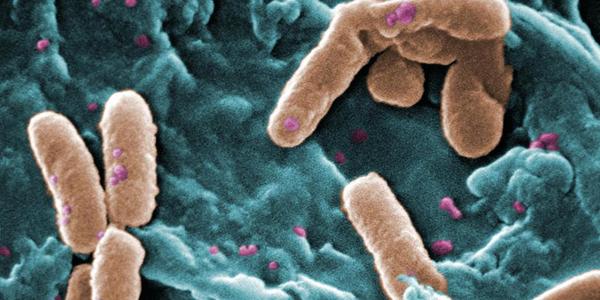
To increase survival and transmission, the pathogen Pseudomonas aeruginosa forms biofilms, or adherent clumps of cells coated in a slimy matrix, in response to environmental stresses. One environmental stress is a temperature decrease, such as from a human host to room temperature in a hospital, where P. aeruginosa is particularly risky for vulnerable patients.

Mechanistically, the secondary messenger cyclic di-guanosine 3’,5’-monophosphate, or c-di-GMP, is increased to promote biofilm format...

Hart promoted to full clinical professor

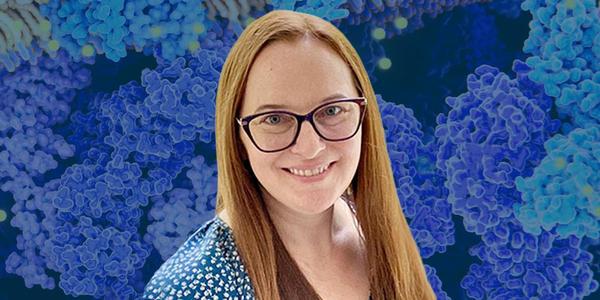
Orla Hart was promoted to full clinical professor of biochemistry in the College of Agriculture at Purdue University. Her promotion was approved by the Purdue University Board of Trustees and will be effective in August 2026.

Hart has worked in the Department of Biochemistry at Purdue since 2013. She is an expert in undergraduate biochemistry education, researching strategies for increased student engagement and improved learning outcomes. In addition to her scholarly work, Hart teaches cours...